
China Best Polypropylene Packaging Manufacturers
China’s polypropylene packaging manufacturers serve food, personal-care, medical, and industrial markets. Their products range from woven sacks and films to rigid tubs and protective components. Choosing a supplier takes more than comparing prices. Buyers should examine material specifications, production consistency, testing practices, and communication.
Packaging educator Walter Soroka defines packaging as “the science, art and technology of enclosing or protecting products for distribution, storage, sale, and use.” That broad definition matters here. Polypropylene packaging must protect contents while meeting practical needs for weight, sealing, printing, and handling. A sample roll or molded part can reveal details that a polished brochure may miss. Check thickness, seal strength, finish, and how the product performs on your own equipment. Small differences matter.
This guide introduces China’s polypropylene packaging manufacturers and the questions worth asking before shortlisting them. Look for clear product data, traceable quality procedures, and relevant experience with your packaging format. Ask how suppliers manage batch variation and resolve defects. Those answers may be less glossy than a factory tour. Still useful. One caution: a low unit price is not proof of good value. Freight, tooling, minimum order quantities, and rejected batches can change the calculation. Supplier claims also deserve independent checks. No single checklist fits every buyer, and this guide cannot replace product testing. That limitation matters.
What Polypropylene Packaging Is and Why It Matters
What Polypropylene Packaging Is and Why It Matters
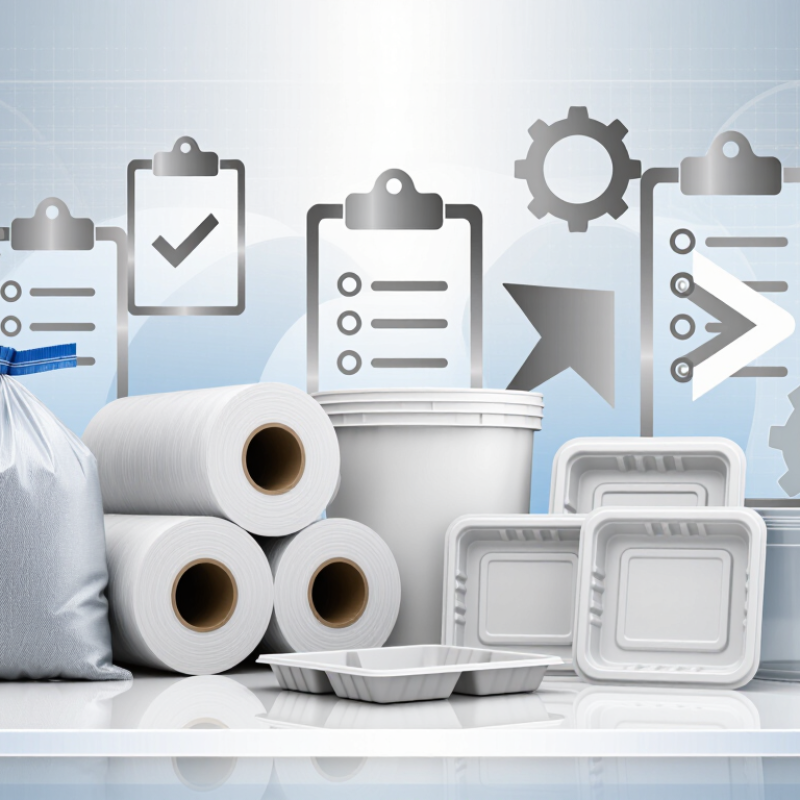
Polypropylene packaging is made from a lightweight thermoplastic resin. It appears in woven sacks, films, flexible pouches, and rigid containers. The material resists moisture and many common chemicals, while its low weight can help reduce shipping loads. A woven sack, for example, can hold dry goods without adding much bulk. Yet performance depends on more than the resin: fabric weave, thickness, seams, and closure design all affect strength and product protection. Polypropylene is not automatically suitable for every application, and poor construction can lead to split seams or damaged contents.
Its practical value comes from balancing durability, processability, and cost. Manufacturers can produce packaging in different formats and tailor features such as ventilation or a moisture barrier. That flexibility matters when products face rough handling, humid storage, or repeated transport. Buyers should still verify specifications through samples and relevant test data rather than relying on broad claims. Recycling options vary by location and packaging design, so end-of-life planning deserves attention too.
Tips: Ask for load and seam-strength data, then test a filled sample under realistic handling conditions. Check whether the packaging protects against the specific moisture, abrasion, or storage risks involved. Small details matter. One overlooked closure can undo a well-designed package.
China Best Polypropylene Packaging Manufacturers - What Polypropylene Packaging Is and Why It Matters
| Packaging Format | What It Is | Typical Uses | Relevant Material Properties | Key Selection Considerations |
|---|---|---|---|---|
| Woven polypropylene (PP) bags | Fabric made by weaving extruded PP tapes; bags may be uncoated, coated, laminated, or fitted with liners. | Grains, animal feed, fertilizer, resins, and other dry bulk products. | Low density; good tensile strength for its weight; resistance to moisture and many common chemicals. | Confirm bag capacity, fabric construction, seam strength, closure, printing needs, and whether a liner or coating is required. |
| Nonwoven PP fabric bags | Fabric formed by bonding PP fibers rather than weaving them into tapes. | Reusable shopping bags, promotional bags, and protective packaging. | Lightweight and moldable; fabric strength and appearance vary with basis weight and construction. | Specify dimensions, handle design, basis weight, load expectations, and whether the bag is intended for repeated use. |
| PP film and flexible packaging | Thin PP film used alone or as part of a multilayer structure, including oriented polypropylene films. | Food wrappers, labels, overwrap, and packaging for household or personal-care products. | Can provide clarity, stiffness, and moisture-vapor resistance; performance depends on film type, orientation, and layer structure. | Check sealing requirements, barrier performance, product compatibility, transparency, and whether the structure is recyclable in the intended system. |
| Corrugated PP sheets and boxes | Rigid, fluted polypropylene sheet converted into reusable or protective packaging. | Returnable transit boxes, dividers, signs, and lightweight protective containers. | Lightweight, water-resistant, and resistant to many chemicals; impact and load performance depend on sheet design. | Evaluate sheet thickness, flute structure, load direction, temperature exposure, and the number of reuse cycles required. |
| Injection-molded PP containers | Rigid containers and components produced by injecting molten PP into a mold. | Food tubs, lids, storage containers, caps, and industrial packaging components. | Good fatigue resistance in suitable designs; many PP grades can tolerate hot-fill or microwave conditions, subject to product specifications. | Confirm resin grade, wall design, lid fit, food-contact documentation where applicable, and use-temperature limits. |
| Blow-molded PP containers | Hollow containers formed by expanding softened PP inside a mold. | Selected bottles, jars, and specialty containers. | Can produce lightweight hollow shapes; suitability depends on grade, container geometry, and processing conditions. | Review neck finish, closure compatibility, drop performance, chemical compatibility, and filling-line requirements. |
| Why polypropylene matters | A thermoplastic polymer used in packaging in flexible, woven, nonwoven, and rigid forms. | Applications range from consumer packaging to agricultural and industrial transport packaging. | Its low density can help reduce package weight. PP is also resistant to moisture and many chemicals, but is not a universal barrier material. | Match the PP format and grade to product protection, handling, processing, regulatory requirements, and end-of-life options. |
| Manufacturer evaluation checklist | Practical criteria for assessing packaging suppliers without relying on company or brand names. | Supplier qualification, sampling, and procurement comparisons. | Quality systems, process control, traceability, and documented product specifications help support consistent supply. | Request samples, dimensional tolerances, test reports, material declarations, production capacity, lead times, and applicable food-contact documents. |
Specifications vary by product design, resin grade, processing method, and intended application. Verify performance and regulatory suitability with the packaging supplier for each use case.
Related Posts
-
10 Best Bulk Packaging Solutions for Your Business Needs?
-

Top China Best Retail Packaging Solutions for Global Buyers?
-
10 Essential Tips for Choosing Environmentally Friendly Packaging Solutions?
-

2026 Top Trends in Retail Packaging You Should Know?
-
China Best Business Product Packaging Suppliers?
-

Top 10 Commercial Packaging Trends in China You Should Know?