How to Find the Best Eco Friendly Packaging?
Choosing the best eco friendly packaging involves more than selecting a kraft paper box. It requires careful attention to materials, product protection, manufacturing, and disposal. A package may look sustainable while using excessive energy or mixed materials. That difference matters.
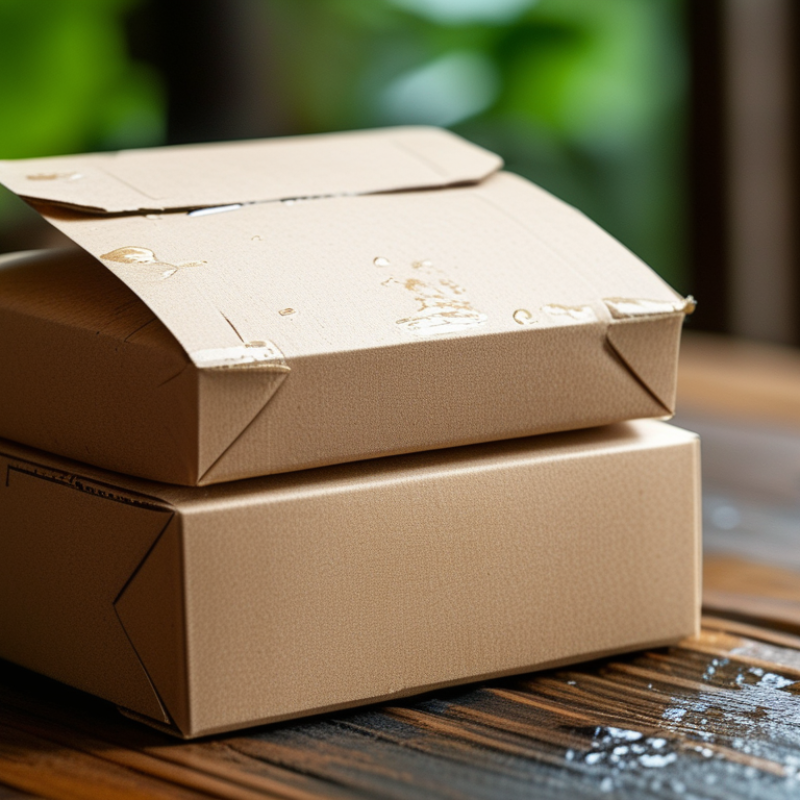
Real experience helps reveal practical problems. A recycled mailer can tear in rain, while a thin compostable pouch may fail under heavy products. Testing packages with actual goods, shipping routes, and storage conditions provides useful evidence. Measure damage, waste, weight, and customer feedback. Small trials often expose weaknesses that product descriptions hide.
Look for credible information from recognized certification bodies, suppliers, and lifecycle studies. Recycled content, renewable materials, reuse potential, and responsible sourcing each deserve separate evaluation. A package labeled “biodegradable” may require specific disposal conditions. It may not break down in a household compost bin. Check local facilities and clear disposal instructions before making claims. Transparency builds trust.
There is no perfect option.
The best eco friendly packaging depends on the product, market, budget, and available waste infrastructure. Glass may be reusable but heavy. Paper may be recyclable but vulnerable to moisture. Plant-based materials may reduce fossil resource use, yet their production still has environmental costs. Honest evaluation includes these compromises. It also accepts that early packaging decisions may need revision after real-world use. This guide explains how to compare options responsibly, verify supplier claims, and choose packaging that protects products without creating unnecessary waste.
Define Your Packaging Needs and Environmental Goals
How to Find the Best Eco Friendly Packaging?
Define Your Packaging Needs and Environmental Goals
Choosing eco-friendly packaging starts with a clear understanding of the product, customer, and delivery conditions. A fragile glass item needs stronger protection than a dry, lightweight product. Measure the product carefully, including height, width, weight, and required cushioning. Oversized packaging wastes material and increases transport emissions.
Your environmental goals should be specific and measurable. You might aim to reduce plastic, lower packaging weight, or improve recyclability. Consider the full package, including labels, coatings, adhesives, and inner fillers. A paper box may seem sustainable, but heavy coatings can complicate recycling. Ask suppliers for material composition, recycled content, and disposal guidance. Request test results for compression, moisture, and drop resistance. Practical evidence matters more than attractive claims.
Tips: Write down your priorities before comparing materials. Test a small batch in real delivery conditions. Track damage rates, material use, and customer feedback. Do not ignore cost or product safety. A package that fails creates waste through returns and replacements.
I once focused too heavily on recycled content and overlooked moisture protection. The result was a damaged shipment and an unnecessary redesign. That experience changed my process. Good packaging balances environmental impact, performance, appearance, and budget. Some compromises are unavoidable. The important part is documenting them and reviewing the decision honestly.
Compare Sustainable Materials and Their Environmental Impacts
Choosing eco-friendly packaging requires more than replacing plastic with paper. The material, product weight, transport distance, and disposal system all change the result.
Paper usually performs well when forests are responsibly managed and recycling systems are available. However, wet or contaminated paper may become unrecyclable. Recycled paper can reduce pressure on forests, but repeated processing lowers fibre quality.
Glass is highly reusable and chemically stable, yet its heavy weight increases transport emissions. Recycled aluminium is another strong option.
The International Aluminium Institute reports that recycled aluminium uses about 5% of the energy required for primary aluminium production. Bioplastics sound promising, but many need industrial composting facilities. They may fail in ordinary bins.
Tips: Compare the full life cycle, not just the material label. Measure package weight, recycled content, reuse potential, and local recovery rates. Ask suppliers for verified life-cycle assessment data. Be careful with impressive claims.
In practical packaging trials, a lighter design often beats a heavier “natural” alternative.
This feels counterintuitive.
Still, durability matters. A package that breaks during delivery creates avoidable waste. The best choice may differ between cities, products, and seasons. Industry reports offer useful direction, but their assumptions deserve scrutiny.
Evaluate Suppliers, Certifications, and Production Practices
How to Find the Best Eco Friendly Packaging?
A reliable supplier should show more than attractive sustainability claims. Ask for material specifications, product samples, and recent test reports. During supplier reviews, inspect the factory floor, storage areas, and production records. Clean facilities do not prove everything, but missing records can reveal weak controls. Check whether the supplier measures water use, energy consumption, waste, and rejected materials. Ask how they reduce production scrap and reuse safe offcuts. Small details matter, such as separated waste bins and clearly labeled raw materials.
Tips:
Request certification numbers and verify their validity, issuing body, and coverage. A certificate may apply only to one material or facility. Check chain-of-custody documents for paper or board packaging. For recycled content, request percentage evidence and testing methods. Compostable packaging needs careful review, because some products require controlled industrial conditions. Do not accept vague wording.
Production quality also affects environmental performance. Ask how inks, coatings, adhesives, and finishing processes are controlled.
Confirm that packaging meets your product’s strength, moisture, and transport requirements. Overly thin material may fail and create more waste.
In my experience, supplier questionnaires are useful, but an independent audit is stronger. Still, audits can miss seasonal problems. Review performance regularly, compare delivery batches, and record damaged cartons.
The best choice is not always the cheapest or the greenest claim. It is the supplier that can prove consistent results.
Assess Packaging Performance, Cost, and End-of-Life Options
How to Find the Best Eco Friendly Packaging?
Assess packaging performance before judging its environmental value. A lighter box may reduce material use, yet collapse during stacking. Measure compression strength, moisture resistance, sealing quality, and product loss during transport. A damaged product can erase the benefit of lighter packaging. In practical trials, test filled packages on pallets, not empty samples. Small details matter. Corner dents often reveal weak design.
Cost should include more than the purchase price. Compare material costs, packing labor, storage space, shipping weight, damage rates, and disposal fees. The OECD Global Plastics Outlook reports that packaging generates about 40% of global plastic waste. Reducing unnecessary layers can therefore create both environmental and operational savings. However, cheaper alternatives may require new equipment or slower packing speeds. That trade-off is easy to miss. Cost calculations should use real shipment data, not supplier estimates alone.
End-of-life options need local verification. Recycling claims depend on collection systems, sorting equipment, and market demand. The U.S. Environmental Protection Agency reported a 13.1% recycling rate for plastic containers and packaging in 2021, compared with 68.2% for paper and paperboard packaging. These figures show why material choice matters, but they do not guarantee recovery everywhere. Compostable packaging may also fail without suitable commercial facilities. Ask where the package will actually go. A clear disposal label helps, but consumer behavior remains uncertain. Even careful assessments can contain gaps. That is worth admitting.
How to Find the Best Eco-Friendly Packaging
Packaging should be assessed across product protection, relative cost, and end-of-life options. Higher scores indicate stronger overall performance within each category.
Select, Test, and Improve Your Eco-Friendly Packaging Solution
How to Find the Best Eco Friendly Packaging?
Select, Test, and Improve Your Eco-Friendly Packaging Solution
The best packaging starts with the product, not a fashionable material. Check weight, moisture, temperature, shelf life, and delivery conditions. A dry snack may suit a paper-based pack, while oily products need stronger barriers. Ask suppliers for clear material data and responsible sourcing records. Avoid broad claims that cannot be verified.
Test a small batch before changing your full packaging line. Measure seal strength, stacking performance, drop resistance, and appearance after transport. Place sample boxes in humid storage areas. Then inspect them closely. A package that looks excellent on a desk may fail inside a delivery van. I once underestimated humidity during testing, and the outer paper softened sooner than expected. That mistake changed our test plan.
Use customer feedback, waste audits, and local recycling guidance to improve the design. Reduce unnecessary layers, simplify labels, and choose materials that nearby facilities can actually process. Compostable packaging is not automatically suitable for every disposal system. Ask practical questions about collection, sorting, and end-of-life treatment. Keep records of test results and supplier statements. Small pilot runs reveal problems cheaply. Some changes may increase material use, too, so review the full impact instead of chasing a perfect image. Test again.
How to Find the Best Eco Friendly Packaging? - Select, Test, and Improve Your Eco-Friendly Packaging Solution
| Packaging Solution | Typical Material Source | Typical Recycled or Renewable Content | End-of-Life Route | Typical Basis Weight or Thickness | Suitable Product Protection | Key Test to Complete | Main Improvement Opportunity |
|---|---|---|---|---|---|---|---|
| Recycled Corrugated Fiberboard | Recovered paper fiber with a renewable fiber component where required | Commonly about 70%–100% recycled fiber, depending on grade and performance needs | Paper recycling where clean and accepted by the local collection system | Approximately 3–8 mm board thickness; often 250–700 g/m² liner and medium combined | Shipping protection, stacking strength, cushioning and moderate compression resistance | Compression, edge-crush, vibration, drop and humidity conditioning tests | Reduce empty space, optimize flute profile and remove unnecessary plastic tape or coatings |
| Molded Fiber or Molded Pulp | Recycled paper, agricultural fiber or other cellulose-based fiber | Often about 60%–100% cellulose fiber; exact content varies by formulation | Usually recyclable with paper if uncoated and accepted locally; some grades are compostable under suitable conditions | Approximately 1.5–6 mm molded wall thickness | Product fit, impact absorption, separation and light moisture protection | Drop, vibration, compression, moisture exposure and dimensional stability tests | Improve mold accuracy, reduce wall thickness and avoid non-recyclable barrier coatings |
| Uncoated Paperboard | Virgin or recycled cellulose fiber | Approximately 30%–100% recycled fiber, depending on stiffness, appearance and food-contact requirements | Paper recycling when dry, clean and accepted by the local system | Approximately 200–600 g/m²; commonly 0.3–0.8 mm thick | Dry goods, cartons, sleeves, labels and secondary packaging | Crease-fold performance, burst or tear resistance, rub resistance and humidity conditioning | Use the lowest practical grammage and design the package to avoid mixed-material laminates |
| Paper-Based Flexible Packaging | Paper substrate, sometimes combined with a thin functional coating | Commonly about 60%–95% fiber by weight, depending on the barrier structure | Paper recycling only when the coating and local recycling rules permit it | Approximately 40–120 g/m² | Dry foods, powders and lightweight products requiring printability and low material use | Seal strength, pinhole resistance, grease resistance, moisture vapor and oxygen transmission | Select a coating that preserves required barrier performance without preventing fiber recovery |
| Recycled PET Container or Tray | Post-consumer recycled polyethylene terephthalate, with virgin resin where performance requires it | Commonly about 25%–100% recycled content, depending on clarity, strength and regulatory requirements | Plastic recycling where the resin is collected, sorted and accepted | Approximately 0.25–1.0 mm for trays; bottles vary by design and capacity | Moisture protection, visibility, impact resistance and moderate oxygen barrier | Leak, drop, top-load, seal integrity, migration and shelf-life testing | Use clear, mono-material designs and eliminate labels, pigments or adhesives that disrupt sorting |
| Bio-Based PLA Packaging | Poly乳酸 (PLA) produced from fermented plant-based sugars or starches | Typically about 100% bio-based carbon content, although additives and coatings may vary | Industrial composting only where the item is certified, collected and processed by an appropriate facility; generally not suitable for ordinary recycling streams | Approximately 0.2–1.0 mm for films, cups and trays | Cold foods, dry products and short-life applications with moderate moisture requirements | Heat resistance, seal performance, oxygen and moisture transmission, and compostability certification | Use only when a verified industrial composting route exists and clear disposal instructions can be provided |
| Reusable Rigid Packaging | Durable plastic, metal or fiber-reinforced material designed for repeated circulation | Varies widely; recycled content is less important than verified reuse cycles and recovery at end of life | Reuse first, followed by material recycling when the product reaches the end of its service life | Approximately 1–5 mm wall thickness, depending on material and load requirements | Repeated transport, impact resistance, stacking and product protection over multiple cycles | Cycle durability, cleaning validation, return rate, loss rate, transport emissions and total life-cycle cost | Increase return participation, minimize washing impacts and confirm a sufficient number of reuse cycles |
Related Posts
-
Top Tips for Using Friendly Packaging in Global Sourcing?
-
What Are the Benefits of Friendly Packaging in China?
-
How to Choose Eco Friendly Bags for Packaging Tips and Ideas?
-
How to Improve Packaging for Better Sales in China?
-

What is Commercial Packaging and Why It Matters for Your Business
-
Top 10 Eco Friendly Bags for Packaging You Should Consider?