How Can China Best Suppliers Improve Packaging?

China’s leading suppliers are under growing pressure to improve packaging as buyers demand safer, cleaner, and more sustainable deliveries. Packaging now affects product protection, shipping efficiency, customer satisfaction, and brand reputation. A damaged carton can erase months of careful manufacturing work.

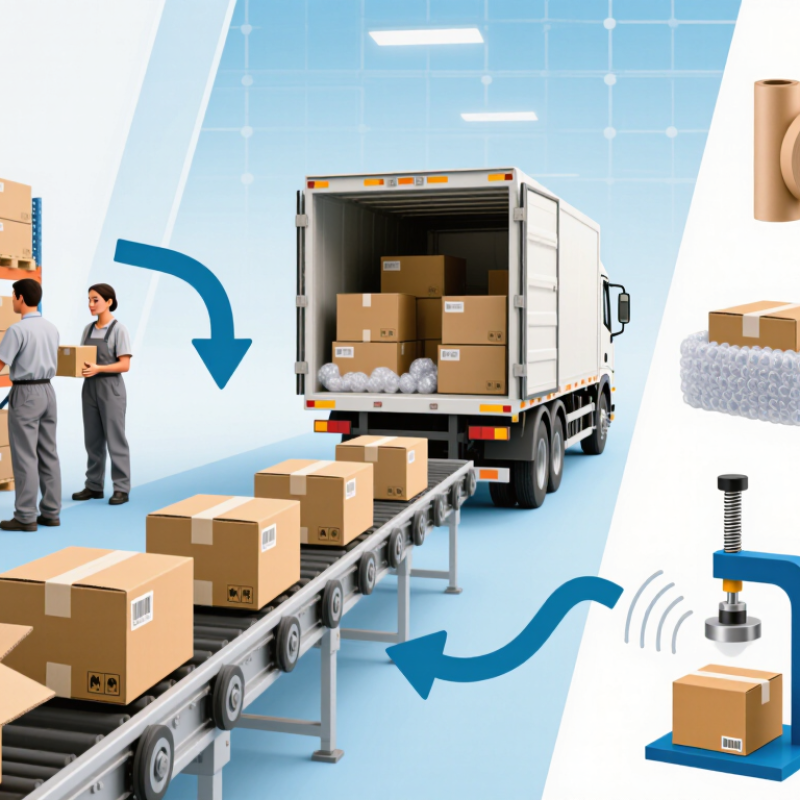
Experienced suppliers understand that packaging is not merely an outer layer. It is a practical system involving material selection, structural design, labeling, testing, and transportation planning. Strong corrugated cartons, molded inserts, moisture barriers, and secure closures can reduce damage during long-distance shipping. Clear labels also help warehouse teams handle products correctly. Small details matter.

Reliable improvement begins with evidence. Suppliers can review return records, inspect damaged cartons, and test packages under compression, vibration, and humidity conditions. They should also discuss packaging needs directly with importers, distributors, and logistics partners. A package that performs well in a factory may fail after several transfers. That possibility deserves attention.

Sustainable materials are valuable, but they should not weaken protection. Recyclable paper, reduced plastic, water-based inks, and right-sized cartons can lower waste when applied carefully. However, not every “green” solution suits every product. Some suppliers may overestimate their packaging performance or overlook regional recycling limits. Honest evaluation is necessary.

This article examines practical ways China suppliers can improve packaging through better design, quality control, testing, customization, and communication. The goal is not perfect packaging immediately. It is safer progress, supported by measurable results and continuous review.
How Can China Best Suppliers Improve Packaging?

Benchmark Packaging Against ISO 18601 and GB/T 16716 Requirements

How Can China Best Suppliers Improve Packaging?

Chinese suppliers can benchmark packaging against ISO 18601 and the GB/T 16716 series before changing materials. ISO 18601 treats packaging as an environmental system. It emphasizes source reduction, reuse, recycling, and recovery. GB/T 16716 provides China-focused guidance for design, material selection, recycling, and disposal. The practical starting point is measurable. Record package weight, product-to-package ratio, recycled content, and transport damage rates. Measure it.

The OECD Global Plastics Outlook reported 353 million tonnes of plastic waste in 2019. Only 9% was recycled. The World Bank’s What a Waste 2.0 estimated 2.01 billion tonnes of municipal solid waste annually. At least 33% was not managed safely. Suppliers should test whether thinner cartons still protect products during stacking, vibration, and humidity exposure. A lighter package can fail in transit. That creates hidden waste. Keep laboratory results, supplier declarations, and recovery instructions for each packaging component. A simple material label is not enough when adhesives, coatings, and mixed films complicate recycling. GB/T 16716 checks can reveal these weaknesses. ISO 18601 comparisons can expose unnecessary layers and oversized voids. Some factories still optimize packaging by unit price alone. That approach needs reflection. Packaging performance, environmental impact, and end-of-life data should be reviewed together.

Reduce Material Use by 10–20% Through Right-Sizing and Lightweighting

How Can China Best Suppliers Improve Packaging?

Reduce Material Use by 10–20% Through Right-Sizing and Lightweighting

Leading packaging suppliers can reduce material use by 10–20% through accurate right-sizing and lightweighting. The process starts with measuring the product, protective spacing, and shipping conditions. Oversized cartons often contain unnecessary void fill and require more paperboard. A smaller carton can also improve pallet utilization and reduce transport-related emissions.

Suppliers should test several carton dimensions before changing production specifications. They can compare board caliper, compression strength, edge-crush performance, and drop-test results. Reducing material thickness is not automatically better. A lighter package may collapse in humid warehouses or during repeated handling. This is where practical experience matters. Some designs look efficient on a sample table but fail after long-distance shipping. That needs honest review.

Tips: Begin with the five highest-volume package sizes. Record current dimensions, material weight, damage rates, and void-fill volume. Build one lighter prototype and one right-sized prototype. Test both under stacking, vibration, and humidity conditions. A 10–20% reduction is achievable for many products, but not every package should meet the same target. Keep a safety margin. Review the results with production and logistics teams before full implementation. Small measurement errors can create large losses.

How Can China Best Suppliers Improve Packaging?

Reduce Material Use by 10–20% Through Right-Sizing and Lightweighting

The chart uses a normalized baseline of 100 material-use units for common packaging formats. By reducing empty space and using lighter-gauge materials, suppliers can target approximately 10–20% lower material consumption while maintaining product protection and packaging performance.

Validate Protection with ISTA 3A Testing and Drops up to 1.2 Meters

China’s best suppliers improve packaging by testing failure, not by adding cardboard.
ISTA 3A simulates hazards in parcel-distribution systems. Selected test profiles can include free-fall drops up to 1.2 meters. That is a hard landing. The sequence may also include atmospheric conditioning, vibration, compression, and impact.
Suppliers should record product weight, dimensions, closure methods, and internal voids before testing. These details show whether a corner drop crushes the carton or shifts the product.
According to the Pitney Bowes Parcel Shipping Index 2023, global parcel volume reached 161 billion shipments in 2022. More parcels create more handling events and less tolerance for weak packaging.

During validation, inspect every failure, not only the final pass result. A 1.2-meter corner drop can expose poor edge protection, loose inserts, or excessive empty space. Use calibrated equipment and photograph damage after each impact. Measure carton deformation, seal opening, product movement, and hidden cracks.
A clean carton can still fail. The OECD’s Global Plastics Outlook reports that packaging generated about 40% of global plastic waste in 2019. Right-sizing therefore matters, but reducing material too aggressively can increase damage.
One supplier may pass laboratory testing yet struggle during humid, cold, or repeated distribution. That possibility deserves review. Packaging teams should repeat ISTA 3A testing after changing carton grade, cushioning density, or sealing tape, then compare damage rates with material use and transport costs.

Increase Recycled Content While Meeting 30% Recyclability Targets

How Can China Best Suppliers Improve Packaging?

China-based packaging suppliers can raise recycled content without weakening product protection. The practical starting point is material mapping. Record the resin type, recycled percentage, additives, inks, adhesives, and closure components for every package. Keep records.

A supplier should test recycled resin before production, not after complaints appear. Moisture, color variation, odor, and melt flow can affect sealing and appearance. Small trial runs often reveal problems hidden in laboratory samples. For food, cosmetic, or sensitive products, suppliers must also verify suitability through documented testing and controlled sourcing. A lower recycled percentage may be wiser when safety or shelf life is at risk.

The 30% recyclability target needs a precise definition. Does it mean 30% recycled content, or that 30% of the package is widely recyclable? These measures are different. Suppliers should design mono-material structures where possible, reduce unnecessary coatings, and use compatible labels and closures. Clear material markings help sorting facilities. Factory teams can then check each batch against a written specification, supported by supplier declarations and independent test reports. This process is reliable, but not perfect. Recycled feedstock can change between batches, and overly strict color expectations may increase waste. A useful improvement is to accept controlled visual variation while protecting performance, traceability, and customer requirements.

How Can China Best Suppliers Improve Packaging? - Increase Recycled Content While Meeting 30% Recyclability Targets

Packaging Format Common Material Current Recycled Content Recommended 2026 Target Recyclable Packaging Share Material Reduction Target Priority Improvement
Corrugated shipping carton Paper-based fiber 70% 85% 95% 10% Increase recycled fiber and reduce unnecessary board caliper.
Folding carton Paperboard 40% 60% 90% 8% Use water-based coatings and avoid difficult-to-separate laminations.
Clear rigid bottle PET 25% 50% 85% 12% Increase food-grade recycled PET where technically and legally suitable; use compatible closures and labels.
Opaque container HDPE 20% 40% 80% 10% Use natural or lighter-color resin and reduce pigment systems that limit sorting value.
Flexible shipping mailer Polyethylene film 10% 30% 35% 15% Move toward a mono-material structure and provide clear disposal instructions.
Aluminum can or tin container Aluminum or steel 45% 60% 90% 8% Increase recycled metal input and reduce coatings, inks, and component complexity.
Glass jar or bottle Glass 50% 65% 95% 10% Increase cullet content while maintaining required strength, weight, and color specifications.
Protective foam insert Expanded polyethylene or polystyrene 0% 30% 30% 20% Replace hard-to-recycle foam with molded fiber or a recyclable mono-material solution where performance permits.
Data note: The percentages are planning benchmarks for supplier packaging improvement and should be validated through material certificates, recycled-content declarations, packaging-weight records, and local recycling-system assessments. “Recyclable packaging share” means the percentage of the listed packaging format designed to be technically recyclable through an established collection and sorting system.

Track Cost, Damage, Weight, and CO₂ Using Five Packaging KPIs

How Can China Best Suppliers Improve Packaging?

Track Cost, Damage, Weight, and CO₂ Using Five Packaging KPIs

Packaging improvement starts with measurable evidence, not attractive samples. Suppliers should track packaging cost per delivered unit, including materials, labor, storage, and disposal. The second KPI is damage rate, measured by shipment and product type. A cheaper carton is not successful if crushed corners create returns. The OECD’s Global Plastics Outlook reports that packaging generated about 40% of global plastic waste in 2019. This makes material efficiency a commercial and environmental priority.

The third KPI is packaging weight per unit, recorded before shipment. The fourth is CO₂e per delivered unit, calculated from material weight, recycled content, transport distance, and production energy. The GHG Protocol recommends transparent product-life-cycle accounting, so suppliers should retain invoices, material specifications, and emission factors. The fifth KPI is empty-space ratio. Measure unused volume inside cartons and containers. Small reductions can improve pallet loading, though aggressive compression may increase damage.

A practical dashboard should compare these five KPIs by SKU, destination, supplier, and month. The World Bank estimates that global municipal solid waste reached 2.01 billion tonnes annually, with at least 33% not managed safely. Packaging teams cannot solve that entire problem, but they can reduce avoidable material. A first-pass calculation may look accurate while ignoring tape, labels, protective inserts, or return transport. That weakness deserves review. Pilot one packaging format, inspect damaged units, and adjust the design using real shipment records.