| Standard Woven PP Sack | Coated or uncoated woven polypropylene tapes with stitched or heat-cut edges. | 10–50 kg | 60–110 g/m² | ★★★★☆
Good for regular dry cargo | Low to moderate when uncoated; moisture resistance improves with an inner liner. | Good resistance to tearing and abrasion; exposed cut edges may fray. | Stitched hem, open mouth, drawstring, or sewn-in liner. | Rice, grains, seeds, animal feed, minerals, fertilizers, and other dry bulk goods. | Not fully waterproof unless coated, laminated, or fitted with a sealed liner. |
| Laminated Woven PP Bag | Woven PP fabric bonded to a flat polypropylene film layer. | 10–50 kg | 75–140 g/m² | ★★★★☆
Higher surface durability | Good resistance to rain splash, humidity, and short-term external moisture exposure. | Very good surface abrasion resistance; film can be damaged by sharp edges. | Stitched, heat-sealed, tape-sealed, or valve closure. | Long-distance container transport and cargo requiring improved moisture protection. | Laminate seams and damaged film areas can become moisture-entry points. |
| BOPP-Laminated Printed PP Bag | Woven PP substrate laminated with biaxially oriented polypropylene film. | 10–50 kg | 85–150 g/m² | ★★★★☆
Strong with enhanced surface finish | Good moisture barrier when the laminate and seams remain intact. | Good abrasion resistance and better resistance to scuffing than plain woven fabric. | Stitched open mouth, sewn bottom, or valve-style closure. | Retail-facing agricultural products, pet food, fertilizers, and dry food ingredients. | Usually costs more; printed film does not replace an inner liner for highly moisture-sensitive goods. |
| Valve PP Sack | Woven PP body with an integrated filling valve, commonly used for powdered or granular products. | 10–50 kg | 70–130 g/m² | ★★★★☆
Good when correctly filled and stacked | Moderate to good, depending on valve design, laminate, and liner specification. | Good resistance to handling damage; valve area requires careful quality control. | Self-closing paper or PP valve; optional heat-sealable inner liner. | Cement, flour, starch, chemical powders, minerals, and other products filled by automated equipment. | Valve compatibility and filling equipment must be matched; unsuitable for irregular oversized items. |
| PP Bag with Inner Liner | Woven PP outer shell combined with a loose or fitted polyethylene or polypropylene liner. | 10–50 kg | Outer fabric typically 60–120 g/m²; liner commonly 40–100 microns | ★★★★☆
Outer strength plus improved containment | Very good against humidity and leakage when the liner is properly sealed. | Outer bag provides abrasion resistance; liner improves containment but can be punctured by sharp contents. | Stitched mouth, tie closure, heat-sealed liner, or valve closure. | Hygroscopic powders, food ingredients, chemicals, and products requiring reduced contamination risk. | More packaging components increase cost, filling time, and disposal considerations. |
| Heavy-Duty Woven PP Sack | Higher-denier woven tapes, reinforced seams, stronger handles or gussets, and heavier fabric. | 25–50 kg | 100–180 g/m² | ★★★★★
Designed for demanding handling | Moderate unless laminated or fitted with a liner. | Very good resistance to abrasion, stacking pressure, and repeated handling. | Reinforced stitched mouth, sewn bottom, carry handles, or four-panel construction. | Dense minerals, construction materials, industrial powders, and cargo exposed to repeated loading. | Heavier and less economical than standard sacks for lightweight products. |
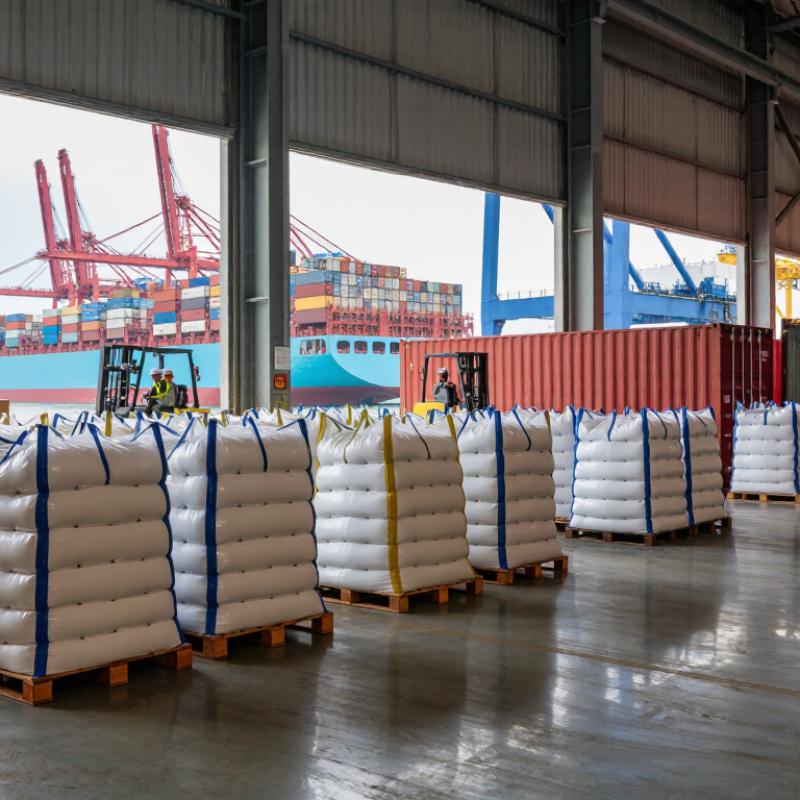
| FIBC / Bulk Bag | Large woven PP container with lifting loops, a filling top, and a discharge spout or flat bottom. | 500–2,000 kg | Typically 140–220 g/m² fabric | ★★★★★
Typical safe working loads are 500–2,000 kg | Moderate to good; coating, liner, and closure design determine moisture performance. | Very good for bulk handling, but loops and seams must be protected from sharp contact. | Top filling spout, skirt, duffle top, bottom discharge spout, or sewn closure. | Bulk minerals, agricultural products, chemicals, granules, and powders shipped by pallet or container. | Requires suitable lifting equipment, stable palletization, and verification of the safe working load. |