How to Choose FIBC Packaging for Global Shipping?
Choosing fibc packaging for global shipping requires more than comparing prices or checking a supplier’s catalog. The right bag must protect the product, survive handling, and fit the destination’s logistics network. A one-ton bulk bag may look suitable in a warehouse, yet fail when exposed to rain, rough pallets, or repeated transfers. Small design choices matter.
Experienced exporters examine fabric strength, safe working load, safety factor, liner options, lifting loops, discharge systems, and closure types. They also review product characteristics, including powder flow, moisture sensitivity, density, and filling temperature. Packaging should match the cargo, not merely the container. For food, pharmaceutical, chemical, or industrial goods, documented material quality and traceability are essential. Independent testing can verify performance claims, although test results never replace careful field evaluation.
Global shipments also require attention to recognized transport requirements, customer specifications, labeling, and destination-country rules. A qualified supplier should provide clear technical data, inspection records, and consistent production controls. Ask how bags are stored before dispatch. Damp warehouses can quietly weaken packaging materials. No checklist is flawless. We may overlook local handling habits or underestimate seasonal weather. That is why trial shipments, documented inspections, and feedback from warehouse teams remain valuable. A practical selection process reduces leakage, contamination, product loss, and avoidable delays. It also builds confidence between manufacturers, logistics partners, and buyers across borders. The strongest decision balances safety, cost, sustainability, and real shipping conditions. Perfect packaging is rare. Reliable preparation is achievable.
Define FIBC Types, Capacities, and Construction Options
How to Choose FIBC Packaging for Global Shipping?
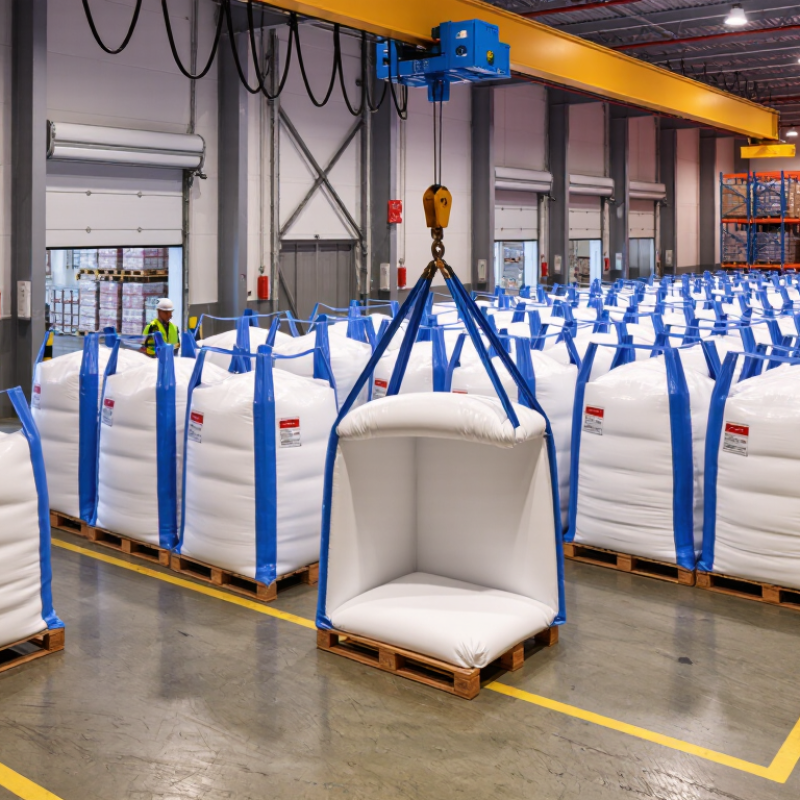
Choosing the right FIBC begins with the product, filling method, and shipping route. Standard four-loop bags suit many dry powders, granules, and agricultural materials. Baffle bags keep a squarer shape, saving warehouse space and improving container utilization. Ventilated designs allow airflow around products that need controlled breathing. Conductive or antistatic FIBCs may be necessary where static discharge creates a workplace risk. Food-contact applications require suitable materials, clean production, and documented handling controls.
Capacity must match both product weight and density. Common working loads range from 500 to 2,000 kilograms. Check the bag’s safe working load, not only its volume. A large bag can become unstable when filled with dense material. It may also exceed handling equipment limits. The tempting choice is the biggest capacity. That is not always practical. Confirm forklift compatibility, pallet dimensions, and container height before ordering.
Construction details often determine shipping performance. Select coated fabric when moisture resistance matters, while uncoated fabric may improve breathability. Liners help contain fine powders, but they can slow filling or discharge. Choose top and bottom styles according to the equipment used at each port. Reinforced loops, sift-resistant seams, and secure closures reduce leakage during repeated handling. A 5:1 safety factor is common for single-trip use, while reusable designs may require stricter inspection and testing. Specifications should reflect actual loading cycles. Small assumptions can become expensive problems. Review samples under real conditions, because laboratory confidence alone may not reveal every handling weakness.
Match Bag Specifications to Product and Handling Requirements
How to Choose FIBC Packaging for Global Shipping?
Matching an FIBC to the product is more important than choosing the largest available bag. Start with product density, flow behavior, moisture sensitivity, and discharge needs. Fine powders may require a sift-proof construction or a suitable liner. Granular materials often need stronger seams and controlled filling. Consider the safe working load and safety factor carefully. A bag that looks robust may still fail under repeated handling.
Handling conditions shape the specification. Will forklifts, cranes, or automated lines move the bags? Select lifting loops that suit the equipment and loading pattern. Check the bag’s dimensions against pallets, containers, and warehouse space. For long ocean routes, protection from humidity and abrasion matters. UV resistance may be necessary when bags wait outdoors. Compression testing, drop testing, and trial loading can reveal weaknesses before shipment.
Real packing trials often expose small errors. A discharge spout may be too narrow, or a liner may slow material flow. These details are easy to miss on a specification sheet. I would not approve a design from measurements alone. Review filling speed, stacking height, closure method, and unloading safety with the actual operators. Keep traceable inspection records, and confirm that materials suit the product and destination requirements. Specification changes should be documented, even when they appear minor.
How to Choose FIBC Packaging for Global Shipping?
Match the bag’s safe working load, liner, discharge design, and electrostatic protection to the product and handling environment.
The values shown are representative nominal safe working loads commonly used for planning FIBC specifications. The final selection must be verified against the product bulk density, filling method, discharge method, stacking conditions, transport route, and applicable packaging standards.
Evaluate Material Safety, Durability, and Environmental Conditions
Choosing FIBC packaging for global shipping starts with the product, not the bag price. Polypropylene fabric should match the load’s density, flow, and filling temperature. For powders, a properly fitted liner can reduce moisture entry and product contamination. For food or pharmaceutical applications, request migration testing and destination-market declarations. Do not rely on a generic “food-grade” claim.
Durability must be verified through documented testing. ISO 21898 covers flexible intermediate bulk containers for non-dangerous goods and addresses construction, performance, and testing requirements. Ask for the safe working load, safety factor, seam strength, and lifting-test results. A 1,000-kilogram load needs more than strong-looking fabric. It needs traceable production records and consistent inspection. In practice, no checklist is perfect. A damaged lifting loop can matter more than a minor surface scuff.
Environmental exposure changes performance. Ultraviolet radiation can weaken polypropylene during outdoor storage, while humidity may affect liners, closures, and hygroscopic products. The World Bank’s What a Waste 2.0 report estimated global waste could reach 3.40 billion tonnes annually by 2050, increasing pressure to reduce packaging waste. UNEP reported in Turning off the Tap that plastic pollution could fall by 80% by 2040 through reuse, recycling, and better design. Choose reusable FIBCs where handling systems support repeated use, but confirm cleaning, inspection, and traceability. Reuse sounds efficient. Sometimes it is not. A poorly cleaned bag creates greater safety risks than a new, simpler design.
Check International Shipping, Compliance, and Documentation Needs
How to Choose FIBC Packaging for Global Shipping?
International shipping starts with compliance, not fabric selection. UNCTAD’s Review of Maritime Transport reports that over 80% of global merchandise trade by volume moves by sea. That exposure makes moisture, compression, and handling risks impossible to ignore. Choose an FIBC with documented safe working load, safety factor, lifting design, and liner compatibility. ISO 21898 provides a useful technical reference for FIBCs carrying non-dangerous goods. Still, a certificate alone cannot replace shipment-specific checks.
Documentation must match the cargo and destination. Prepare the commercial invoice, packing list, certificate of origin, material specification, and inspection records. For sea freight, the International Maritime Organization’s SOLAS rules require a verified gross mass before container loading. Weigh the filled container with calibrated equipment. Guesswork fails here. The packing list should state bag quantity, net weight, gross weight, dimensions, and lot numbers. Customs data must also match the booking and shipping instructions.
Check import rules before production, especially for food-contact materials, recycled content, fumigation, labeling, and pallet treatment. The World Bank’s Logistics Performance Index 2023 compares logistics performance across 139 economies, showing how customs and shipment reliability affect delivery outcomes. A practical review should involve the exporter, importer, freight forwarder, and quality team. One weakness remains common: teams approve the bag but overlook the liner, pallet, or container floor. Inspect the complete loading system. It is less convenient, but more reliable.
How to Choose FIBC Packaging for Global Shipping? — Check International Shipping, Compliance, and Documentation Needs
| Shipping Requirement or Decision | What to Check Before Selecting the FIBC | Recommended Technical Approach | Required or Common Evidence | Documentation and Marking Considerations |
|---|---|---|---|---|
| Product classification | Confirm whether the cargo is a general commodity, food ingredient, pharmaceutical material, chemical, powder, granule, or hazardous substance. | Match the bag construction, liner, fabric, discharge design, and cleanliness level to the product’s physical and regulatory requirements. | Product specification, Safety Data Sheet where applicable, and hazard classification information. | Use the correct product description, HS code, hazard details, and transport classification in shipping documents. |
| Dangerous goods transport | Determine whether the contents are regulated under the applicable sea, air, road, or rail dangerous-goods rules. | Use a tested and approved UN packaging design when the applicable transport regulations require a UN performance packaging. | UN design-test certificate, test report, production inspection records, and packaging specification. | Apply the required UN marking, packing group information, labels, and handling marks exactly as specified by the relevant transport mode. |
| FIBC safety factor | Review the safe working load, filling and emptying cycle, lifting method, stacking plan, and number of intended uses. | Common design categories include 5:1 for single-trip use and 6:1 for reusable or multi-trip use, but the correct rating must be confirmed by the manufacturer and application assessment. | Safe Working Load certificate, design specification, seam-strength data, and applicable test records. | Display the Safe Working Load, safety factor, handling instructions, and whether the bag is single-trip or reusable. |
| Load stability and handling | Check forklift access, lifting loops, pallet compatibility, container loading, toppling risk, and discharge clearance. | Select suitable loop configuration, base construction, liner arrangement, baffle design, and closure type. Use a pallet or slip sheet when required by the handling system. | Handling drawing, filled-bag stability assessment, stacking test, and loading diagram. | Provide clear lifting, stacking, and discharge instructions to warehouse and transport teams. |
| Moisture and contamination protection | Assess exposure to rain, condensation, humidity, dust, odors, and cross-contamination during port, warehouse, and container handling. | Consider a polyethylene liner, coated fabric, sift-proof seams, sealed closures, or a protective outer cover. Packaging should not be treated as a substitute for dry-container controls. | Material specification, liner compatibility statement, seam or sift-proof test results, and cleanliness records. | Document moisture-sensitive handling requirements and use container desiccants where appropriate to the cargo and route. |
| Food and pharmaceutical contact | Confirm whether the FIBC or liner will directly contact the product and identify the destination market’s applicable contact-material rules. | Use materials supported by an appropriate declaration of compliance, controlled manufacturing conditions, and a documented cleaning or hygiene program. | Declaration of compliance, raw-material statement, migration or suitability data where applicable, and certificate of analysis when requested. | Keep lot traceability, food-contact or pharmaceutical-use statements, and hygiene records with the shipment file. |
| Static electricity control | Evaluate combustible dust, flammable atmosphere, grounding arrangements, filling speed, and the electrical classification of the work area. | Choose the appropriate FIBC type, such as Type A, B, C, or D, only after a documented static-risk assessment. Type C bags require reliable grounding during filling and discharge. | FIBC type declaration, electrical resistance or discharge test data, grounding instructions, and site risk assessment. | Mark the bag with the correct FIBC type and provide prominent grounding and handling instructions where required. |
| International sea freight | Check container payload, internal dimensions, weight distribution, lashing needs, moisture risk, and whether the cargo is classified as dangerous goods. | Choose dimensions that support stable container loading and avoid excessive compression or unsupported overhang. Confirm compatibility with the planned loading pattern. | Container loading plan, cargo weight declaration, packing list, and dangerous-goods declaration when applicable. | Use shipping marks, package count, gross and net weight, consignee details, and any required hazard labels. |
| Air freight | Check airline limits, volumetric weight, pressure and handling conditions, dangerous-goods restrictions, and packaging acceptance criteria. | Use compact dimensions, secure closures, and packaging that prevents leakage or release of contents. Obtain carrier acceptance before dispatch for regulated cargo. | Air waybill data, packing declaration, dangerous-goods declaration where applicable, and carrier approval if requested. | Ensure labels and documents follow the current air-transport rules and carrier instructions; requirements can differ from sea freight. |
| Road and rail connections | Identify all transit countries and modes because a shipment may be subject to different national or regional dangerous-goods requirements. | Use consistent package identification and ensure the FIBC remains secure during vibration, braking, and repeated handling. | Transport document, packing list, load-securing plan, and applicable dangerous-goods documentation. | Verify language, label, placard, and document requirements for each transit jurisdiction before loading. |
| Wooden pallet or skid use | Determine whether the FIBC is shipped on wood packaging material and whether the destination applies international phytosanitary controls. | Use compliant treated and marked wood packaging where required. Plastic pallets or slip sheets may reduce wood-related entry issues. | Visible phytosanitary treatment mark on regulated wood packaging; supplier records may also be retained. | International standards for wood packaging generally apply to solid wood pallets, crates, and dunnage, not to the polypropylene FIBC itself. |
| Import and customs clearance | Confirm the importer of record, country of origin, customs value, HS classification, and any product-specific import permits. | Keep packaging descriptions consistent across the commercial invoice, packing list, transport document, and purchase documentation. | Commercial invoice, packing list, bill of lading or air waybill, certificate of origin when required, and permits if applicable. | State package quantity, FIBC net and gross weight, dimensions, cargo description, country of origin, and marks or numbers. |
| Traceability and quality control | Define how each bag will be linked to production, raw-material lots, inspection results, and the shipment. | Use a unique batch or lot code printed on the FIBC and recorded in the packing and quality systems. | Certificate of analysis, inspection report, batch record, production date, and corrective-action records where relevant. | Retain traceability records for the period required by the applicable product, customer, and regulatory rules. |
| Environmental and recycling claims | Check destination rules for packaging waste, extended producer responsibility, recycled content, and disposal claims. | Use clearly defined material specifications and avoid unsupported claims such as “recyclable” unless collection and recycling conditions are identified. | Material declaration, recycled-content evidence if claimed, and packaging-waste compliance information where applicable. | Provide accurate polymer identification and disposal guidance without implying universal recyclability. |
| Pre-shipment document checklist | Confirm that every document uses matching quantities, weights, package marks, product descriptions, and lot numbers. | Complete a route-specific review before sealing the container or handing cargo to the carrier. | Commercial invoice Packing list Transport document Origin certificate SDS UN certificate if applicable | Final verification should include destination-country rules, carrier instructions, customs requirements, and any buyer-specific packaging specification. |
Compare Suppliers, Testing Standards, and Total Packaging Costs
How to Choose FIBC Packaging for Global Shipping?
Supplier comparison should begin with evidence, not price alone. ISO 21898 defines performance requirements for flexible intermediate bulk containers used with non-dangerous materials. Ask for recent test records covering lifting strength, seam integrity, stacking, drop resistance, and fabric consistency. A reliable supplier should provide batch traceability, inspection procedures, and samples from normal production. Request an independent laboratory report when shipment value is high. Paperwork can hide weak fabric.
Total packaging cost includes more than the unit quotation. Add liners, pallets, labels, warehouse space, loading labor, inspection fees, freight volume, and disposal. The OECD’s Global Plastics Outlook reports that packaging created about 40% of global plastic waste in 2019. Reusable FIBCs may reduce waste, but only when cleaning, return logistics, and damage rates are controlled. Otherwise, a cheaper bag may become expensive after one torn seam.
Compare suppliers using the same specification sheet. Check fabric weight, safety factor, dimensions, filling method, discharge design, and moisture protection. The World Bank’s Logistics Performance Index 2023 shows major differences in international logistics performance between economies. Packaging must therefore match handling conditions, not just the destination country. A small trial shipment is useful. It may reveal awkward pallet stability, dusty discharge, or slow filling. My own caution: projected savings often ignore rework and claims. Use measured shipment data before approving a long-term contract.
Related Posts
-
Why is Business Product Packaging Essential for Success?
-

Top Trends in Commercial Packaging for Global Buyers Today?
-

Top 10 Best Bags and Packaging Solutions for Every Business Need?
-

Why Is Eco Packaging Important for a Sustainable Future?
-
Top Products and Packaging Trends to Watch in 2023 for Sustainable Choices
-
Best Quality Packaging Solutions from China for Global Buyers?